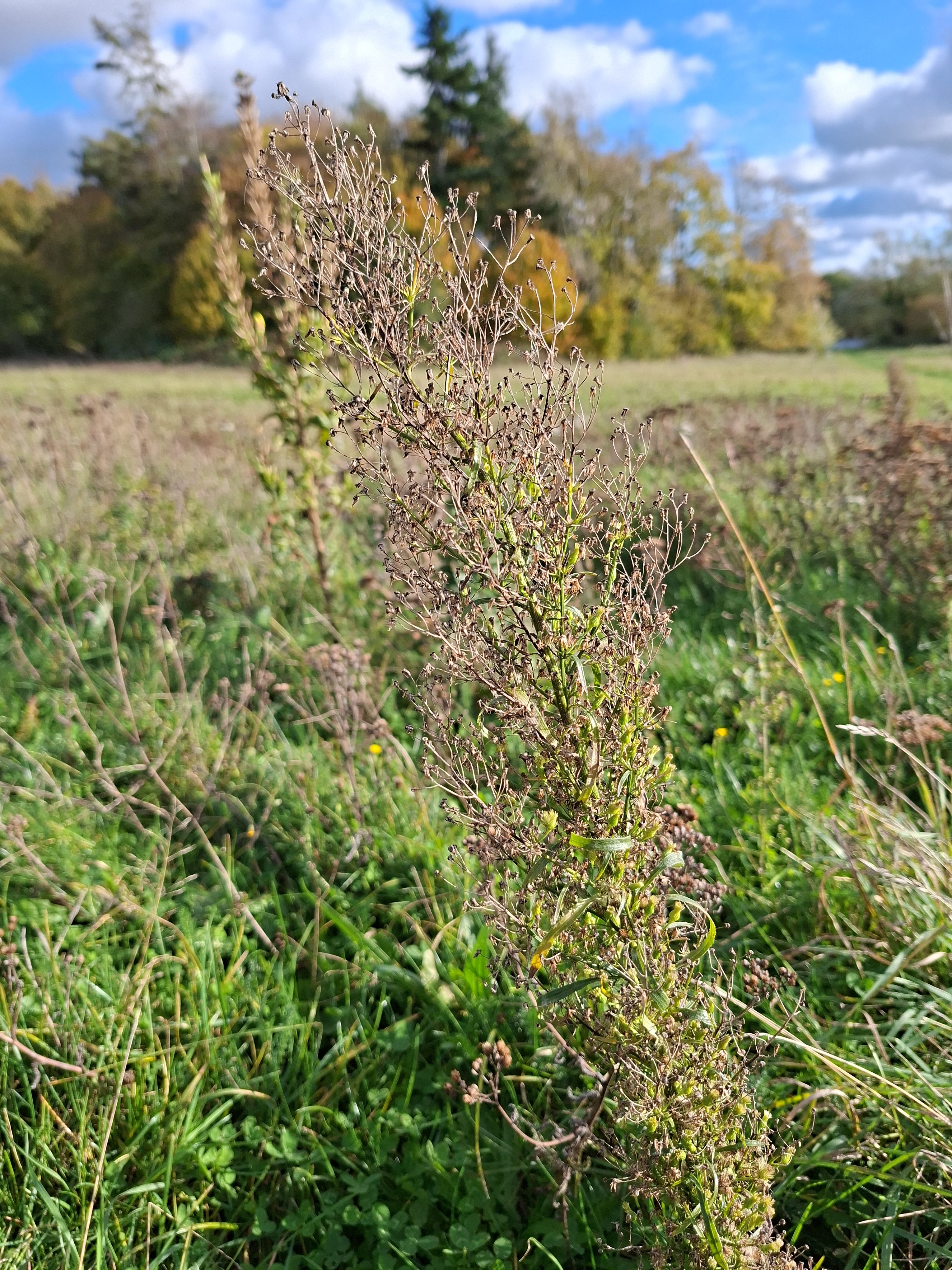
Horseweed (Erigeron canadensis)


Habitat and Identification
Horseweed is an annual herbaceous plant from the Asteraceae family, with long slender stems and leaves, with the leaves being 1 to 12 cm long, the leaves are lanceolate in shape and have a fine toothed margin. The leaves grow in an alternating pattern up the stem with the later ones forming the flowering heads of the plant, the flower heads produced are short, often only 0.5 to 1cm in diameter, these flowers are inflorescences, the outer flowers are often purple or white with the central flowers being a light yellow. The main difference between Erigeron canadensis and its similar looking counterparts, the stems of the horseweed are nearly always hairless. The horseweed can often be found growing in fields, agricultural lands and waste grounds, often taking to disturbed ground and spreading fast. The horseweed is also a non native species in the UK and most of Europe. Originating in north and central America, the horseweed likely came over on ships in the 15th century and quickly took to the soils of waste grounds and farmers fields. in most places horseweed is officially declared a weed, and considered by most farmers to be invasive. Part of the reason for horseweeds rapid colonisation is due to the sheer number of seeds its can produce, with one plant easily producing thousands of tiny seeds that can then be carried on the wind to spread far and wide. In addition to this the seeds of a horseweed plant are capable of germination at any time of year.
Medicinal use and folklore
Horseweed has seen a little use in traditional medicine, mostly by the indigenous groups that originally discovered it, with many sources citing it as a possible remedy for fevers and stomach pain, and more modern uses include use of its derivatives in sedatives and stimulants. In terms of folklore the mention of horseweed is brief, but it can often be seen as a symbol of perseverance or strength, due to its hardy nature and ability to adapt to its environment quickly. Whether that is a good quality or not.