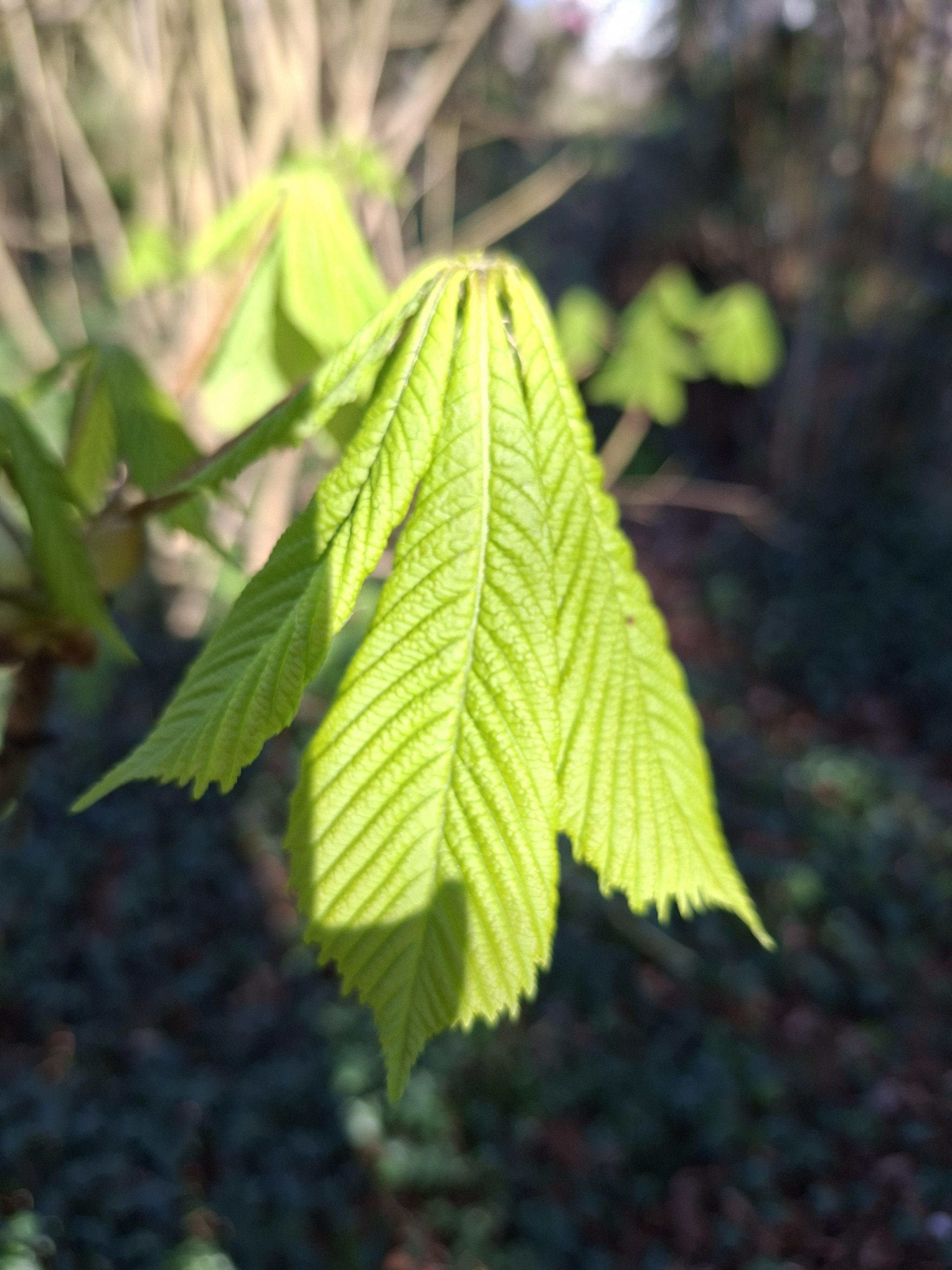
Horse chestnut (Aesculus hippocastanum)


Habitat and Identification
The horse chestnut is a very iconic tree found throughout the UK sections of Europe, the bark of a horse chestnut tree is smooth and reddish-grey when it is young, growing scaled plates as it gets older, the twigs of a chestnut tree are short and smooth with the buds displaying a nice pop of dark red, they also secrete a sticky sap like substance, the leaves of the horse chestnut are palmate, with 5-8 leaflets with toothed margins and distinct and visible vascular structure, each leaflet is connected by a central stem to the branch, the flowers are white and pink with 4-6 petals with long white and yellow anthers that protrude past the ends of the petals, lending it an almost wispy appearance, by far the most distinctive part of the horse chestnut tree is the fruit it bears, once the flowers are pollinated a spiky green husk begins to form, inside which an iconic reddish brown conker begins to grow, which then fall in autumn. The husk cracking open to allow the conker and seed inside to spread throughout the environment. The horse chestnut however, is not native to the UK or most of Europe, in fact being native to turkey, it is widely believed to have been brought to the UK in the 15th or 16th century and planted as a decorative feature due to its wide and rounded canopy shape and pleasing gradients from the leaves year round, from which it escaped into the environment. However due to its limited methods of dispersal it is often only found in places where it has been deliberately planted by humans, making it a very common sight in housing estates, parks, large gardens, streets, managed woodland paths, and field margins.
Uses and folklore
the horse chestnut has a relatively short folk history in the UK, due to being an introduced species however the game of conkers was and still is very popular throughout the UK among children and teens, the game involves the collection of conkers in the autumn, and then leaving them inside to dry and harden, they are then threaded onto strings and players take turns hitting the opponents conker, until one of them breaks, the person who’s conker is intact at the end is declared the winner. The game is very popular among school children, who often gather conkers and bring them into school to compete with their friends, sometimes to the annoyance of the faculty, who have to deal with conkers being everywhere. The timber of horse chestnuts is pale and soft, making it ideal for woodcarving and handcrafts, which I can attest to, having made a few trinkets and forks out of chestnut in the past. Medicinally horse chestnut has been used to make shampoo additives and in the past has been used to make conker flour in the Victorian era, however the process has ceased, due to the fact that chestnut conkers are poisonous in high doses.