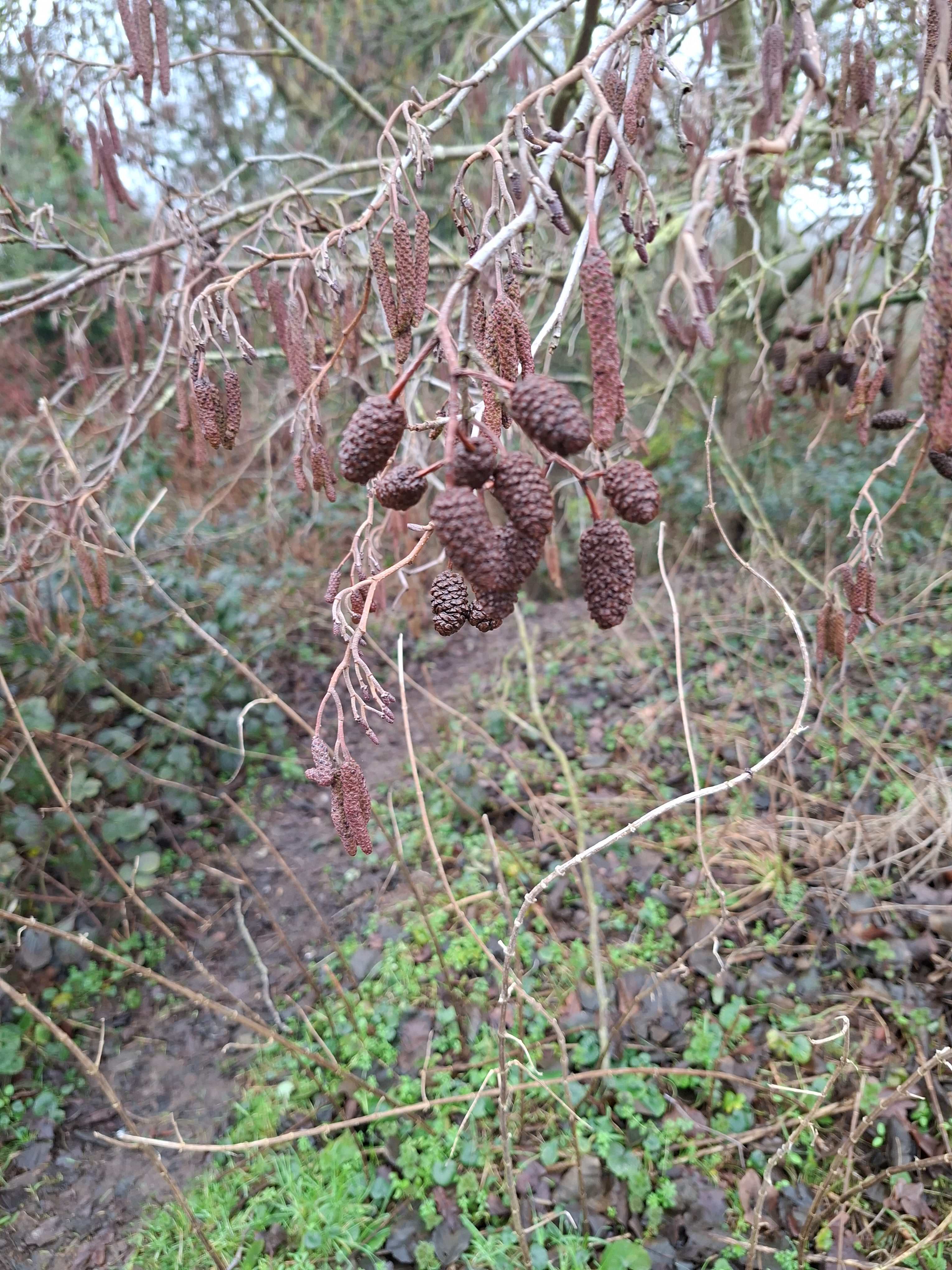
Common Alder (Alnus glutinosa)


Habitat and Identification
The common alder is a deciduous hardwood tree, that is native to the UK and areas of Europe, the tree sports dark bark with deep fissures running up the trunk, the twigs normally light brown, and the newer twigs have a spotted red stem. When the twigs are very new they are covered in a sticky coating that forms due to the presence of tiny lenticels on the twigs, lenticels are small ridges or bumps, that excrete sap, this sap then plays an important role in the later growth of the tree. This is also were “glutinosa” comes from, with it translating to “sticky” in Latin. Over the course of a year the tree will produce hundreds of catkins, which grow in the form of both rounded cones, (female flowers), and slender cones (male flowers). These will both grow in green and turn brown with age, often after the seeds have already been released. Leaves of the alder tree are racquet shaped and feature serrated edges, importantly the tip of an alder leaf Is never pointed, but degrees of roundness and indentation can vary. The leaves vary in size from 4cm to 12cm at their longest, and they all possess a leathery texture. The fruits of the alder tree appear only after the female catkins are fertilised, after which they will open and drop their seeds, allowing them to be dispersed by natural forces, namely wind and runoff. In terms of habitat alders can often be found growing in moist soils often near ponds rivers marshes and lakes, the roots of the tree often aiding with bank stabilisation.
Uses and Folklore
The alder tree has seen much use over the course of history due to its durability when submerged in water. Due to its extremely porous nature it remains structurally sound in water and is very resistant to wet rot. Making it a favourite wood for making boats and other water bound timber. Furthermore alder is the historically preferred choice of wood for clogs. In folklore the alder tree has rich history, with alder flowers being allegedly used to dye cloth and clothes green in the medieval period, such as those of popular outlaws like robin hood. The wood of alder turns a deep reddish orange when cut, leading to a collection of rumours linking it to bad omens as the wood looks like it bleeds when cut.