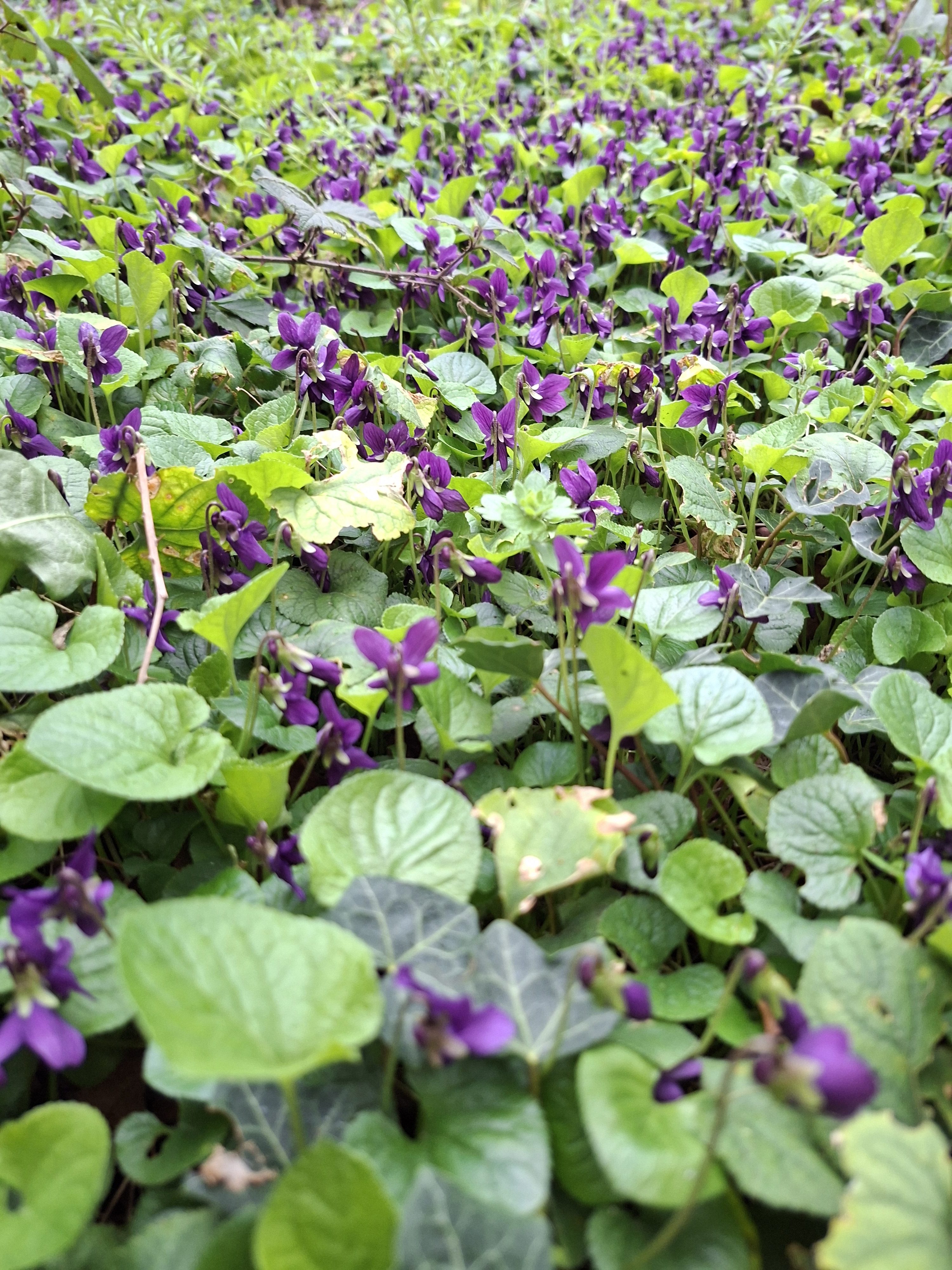
Sweet Violet (viola orodata)


Habitat and Identification
Sweet Violet (Viola orodata) is a herbaceous perennial that flowers in mid to late winter, through spring before dying back in summer. Due to being a perennial plant the sweet violet can sprout again in the same places year upon year, this is due to the fact that the sweet violet spreads rhizomes beneath the soil allowing it to distribute nutrients over a wide area, it is this same rhizome that allows the plant to form patches and makes it very easy for the plant to naturalise itself in a new environment, the sweet violet forms a very distinctive bed of deep green cordate leaves, the flowers of the sweet violet are a rich purple color and there are normally 5 petals per individual flower arranged in a rosette the sweet violet prefers well drained, humus rich soil, and full to partial shade,
Medicine and Folklore
The sweet violet has seen some medicinal use historically, being used by many cultures for its respiratory aiding effects, as well as its anti-inflammatory properties and has been alleged to help with suppressing coughs, lowering fevers through induced sweating, and supporting the lymphatic system. Sweet violet has also been used throughout history as a fragrance and perfume, hailed for its sweet and floral scent. Similarly sweet violet is a popular addition to many cakes and dishes as the flowers are fully edible and have a slightly floral taste, and are often candied, dried or sometimes served fresh as a garnish or topping on deserts or pastries. The is a myth surrounding sweet violet, that says that you can only smell a sweet violet once, this may stem from the fact that sweet violet flowers release the chemical beta ionone that can temporarily block smell receptors if inhaled. Sweet violets were also reported to have been very important to Napoleon. Allegedly pressed sweet violets were found in a locket he was carrying when he died.