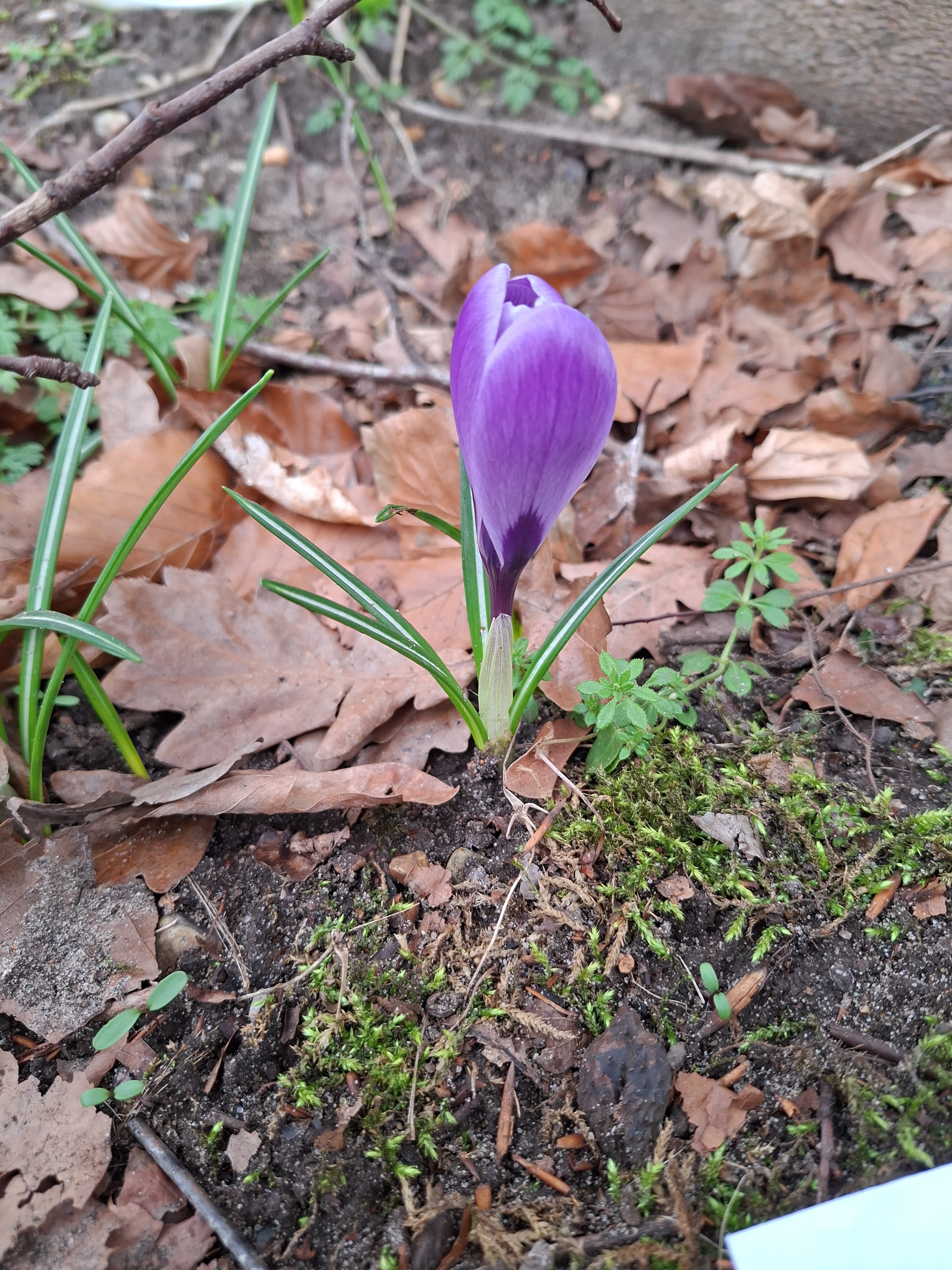
Spring Crocus (Crocus vernus)


Habitat and Identification
The spring crocus is a perennial deciduous flower in the Iridaceae family that grows through late winter and early spring and bears white or purple flowers through spring and summer, before dying back by the autumn. Spring crocus can be identified by its distinctive goblet shape, within which nest the vibrant red stigma. The leaves of the crocus are acuminate and dark green in pigment, sometimes featuring pale stripes running along the length. The leaves will naturally yellow and wither as the annual bloom of the crocus comes to an end. The leaves of a crocus play a vital role in its lifecycle as they collect energy through photosynthesis which is then stored in the corm provide energy and nutrients for the next bloom it is this process that allows flowers like the crocus to grow year after year in the same place. The spring crocus can normally be found in well drained soils that get regular sunlight, such as meadows, hedgerows, parks, and some woodlands
Medicinal use and Folklore
The crocus has a well documented history of being used in both traditional medicine and has been used to derive multiple compounds with medical uses, such as crocin, safranal, and picrocrocin that can be utilized for their antioxidant and anti-inflammatory effects. Furthermore saffron, the spice derived from the stigma of a crocus flower has been used to improve mood, and alleviate certain symptoms of depression. The crocus also has deep symbolic roots in folklore and mythology, being both a symbol of persistence and renewal as well as a being featured in Greek mythology as a mortal man, who was transformed into the crocus flower. Saffron also features in a lot of ancient history as a symbol of wealth, power and influence, this is mostly due to the high price of the spice and its scarcity in certain parts of the world.