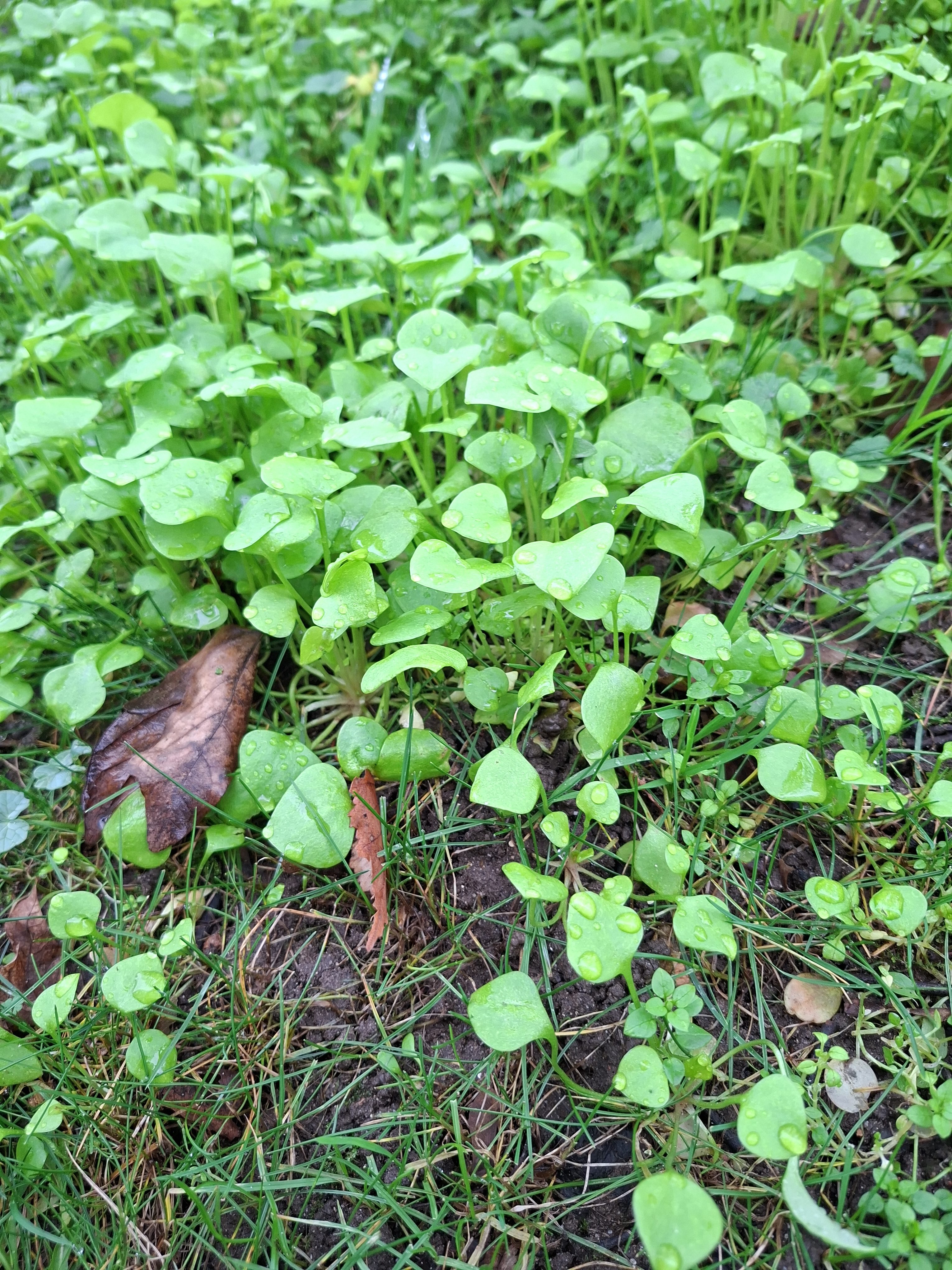
Miners Lettuce (Claytonia perfoliata)


Miners lettuce (claytonia perfoliata) is an edible flowering plant belonging to the amaranthaceae family, and can commonly be found in damp and shady areas in late winter into early spring, it is not native to the UK or Europe but has been introduced and is not considered invasive, it is believed that the botanist Archibald Menzies was responsible for the introduction of miners lettuce to the UK, as he brought it to the Kew gardens in London in 1794, and it was subsequently found in the wild in 1849, and has since spread across many areas of the UK and western Europe, the plant itself can be anywhere from 10-30cm in length with unbranched stems each bearing 1-2 leaves, the stems often take on a reddish tint towards the base, the leaves are basal in shape with smooth edges, the plant does bear flowers starting normally in late spring, and they are found in the centre of the fruit bearing leaves, which compared to the young basal leaves are circular, the flowers are small and white, usually consisting of 5 petals, 5 sepals are present but are normally quite small compared to the petals,
Miners lettuce is a common and popular edible plant and has been reported to taste very similar to spinach, it is commonly eaten raw, as all parts of the plant can be eaten raw apart from the roots providing a crisp taste to salads or other dishes.
The name “miners lettuce” originated back in California during the gold rush, where the miners would eat it to prevent scurvy, this was because of its high vitamin C content. In the modern day miners lettuce can be found in damp and shaded areas all over the UK, such as the bases of trees, hedgerows and woodland areas.
When foraging for Miners lettuce it is very important to be aware of possible lookalikes that are toxic, such as giant hogweed (much taller and wider leaves), wild garlic (very distinctive smell) and hemlock weed (thicker, almost woody stem)