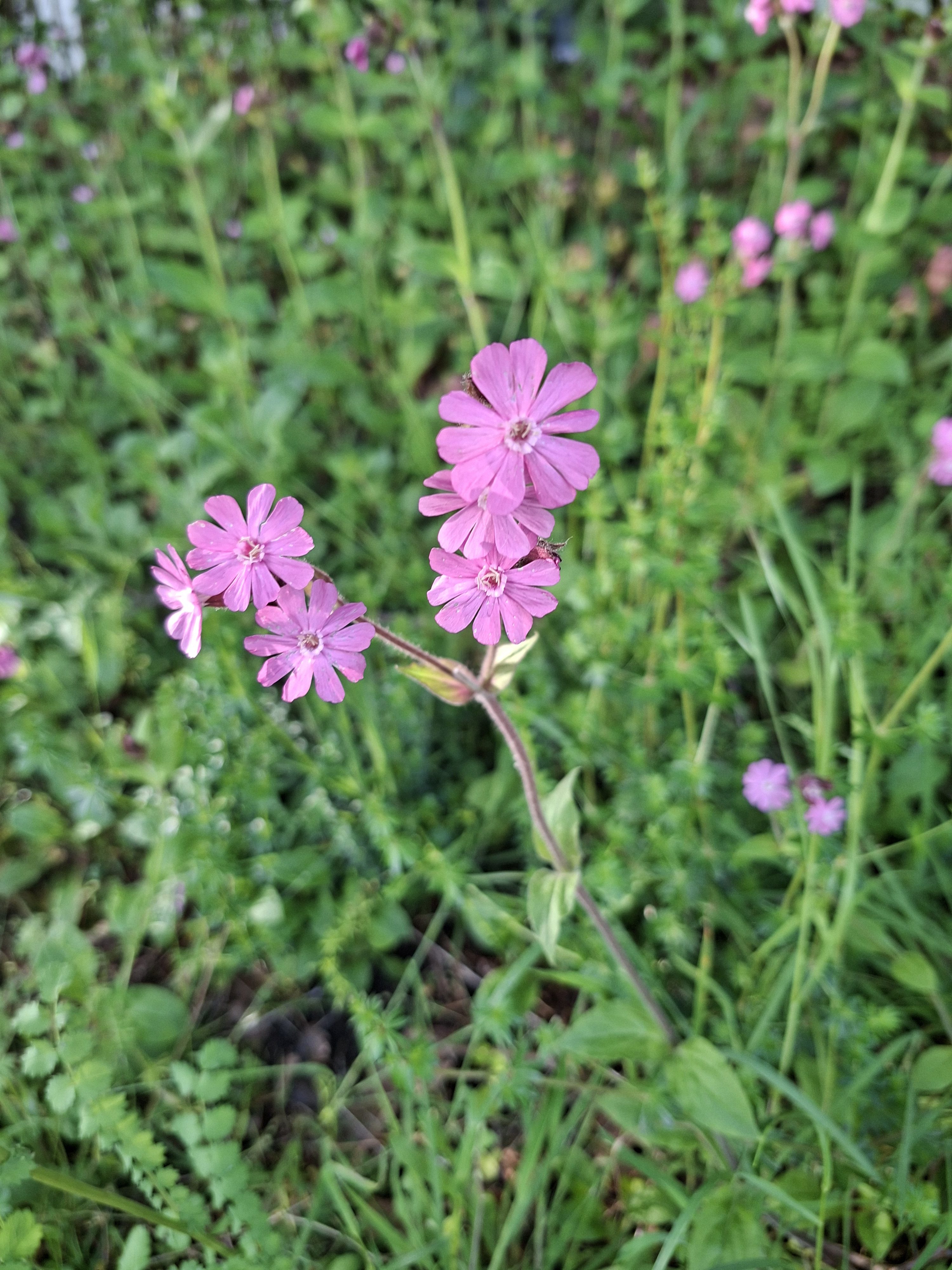
Red Campion
(Silene dioica)


Habitat and identification
Red campion is a distinctive perennial or sometimes biennial plant that is known for its distinctive pink-red flowers. The plant grows in early spring, flowering in may until September, the plant itself bears a tall stem ranging in size from 10cm to up to 60cm, which is covered in a fine structure of hairs, the leaves grow opposite and are visibly hairy. The red campions flowers are its most distinctive feature, with five petals, fused at the base, the calyx is normally purple but can wither with age to a green-brown. The petals long and rounded at the tip, the anthers of the flower are a soft yellow, and sit inside the calyx. Red campion prefers shaded and well drained soil such as hedges, ditches, roadside verges and sometimes woodland. Red campion is also recognised as an ancient woodland indicator species, so its presence may indicate the presence of an ancient woodland. The red campion Is quite a hardy flower being reasonably resistant to drought and other environmental hardships. The red campion has only a couple of lookalikes, namely the white campion (silene latifolia), which when out of flower can easily be confused, as their external appearance is very similar. However, when in flower the difference is quite apparent, with the white campion displaying white-yellow flowers in stark contrast to those of the red campion. Red campion is a native species in the UK and is pretty widespread over not only the UK but Europe as well.
Medicinal use and folklore
red campion has been prominent in historical medicine as a primitive remedy for snakebites and puncture wounds, the legitimacy of the claim, however, is contested. However, the presence of the red campion in folklore is concrete, being mentioned in many a folk tale tell of red campion tufts hiding fairies and woodland sprites, to prevent their discovery. Furthermore, they have been mentioned in poetry and tales throughout history,