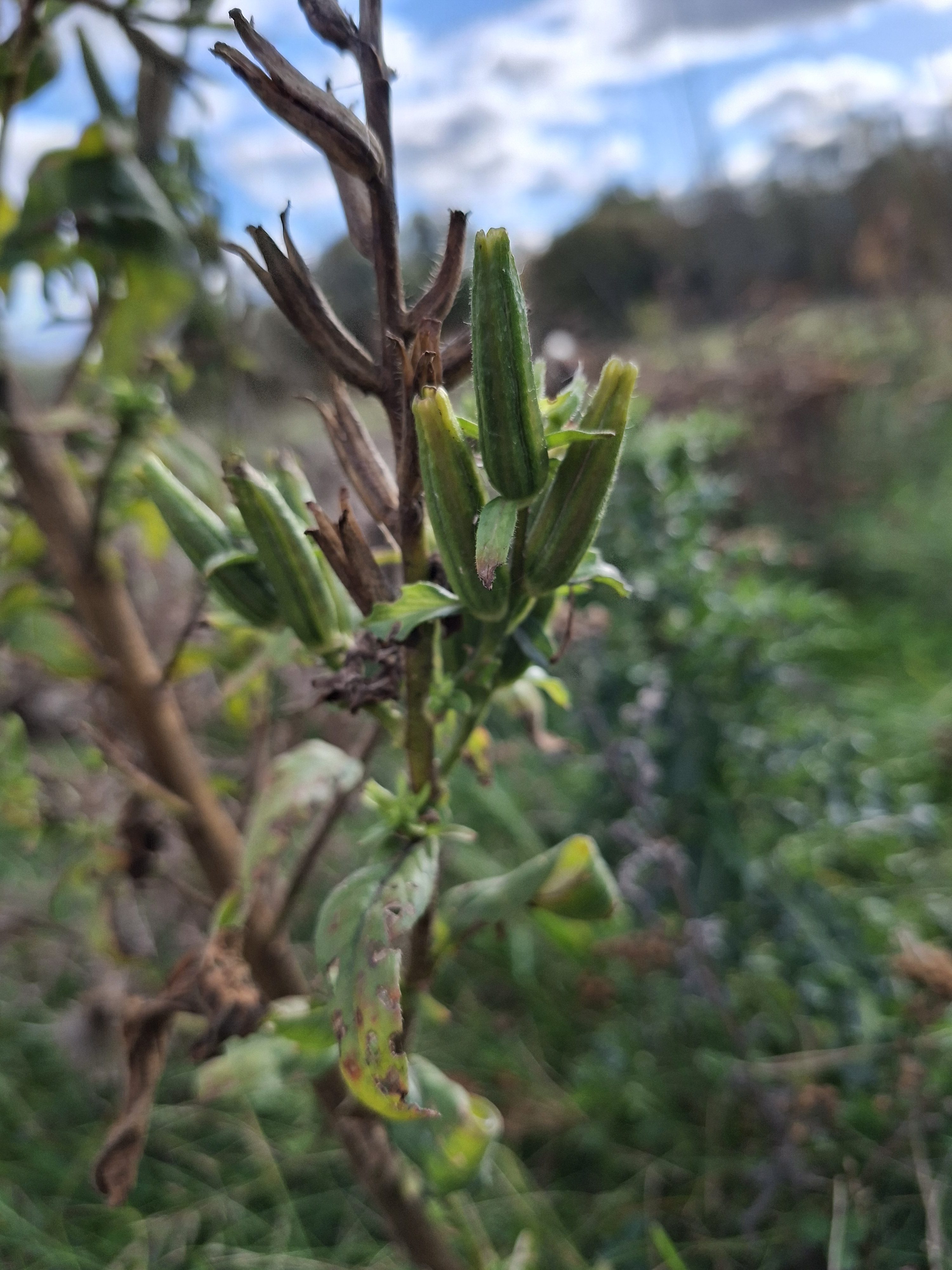


Large Flowered Evening Primrose (Oenothera glazioviana)
Identification and habitat
Large Evening Primroses (Oenothera glazioviana) can be characterized by their large and distinctive yellow flowers and red striped sepals, they are a very hardy flower often growing in poor quality soil such as those found near construction sites, railways, waste grounds and in roadside banks, the plant normally grows up to 170cm tall, and the four petals are around 25-50mm, when the flowers are closed they form a cylindrical capsule tapered towards the end, that is normally a gradient of yellow green and dark red. The leaves of the evening primrose are lanceolate and typically a light green, these characteristics play a major role in the use of the evening primrose as an ornamental flower in gardens and flowerbeds across the UK, when paired with its vibrant yellow flowers it can add significant visual appeal to a landscape, The seed Capsule of the Evening primrose is filled with small brown seeds, due to their small nature when the seed pod splits open the seeds are released into the environment to be dispersed by the wind or by the local fauna, the low weight and size of the seeds are crucial to its ability to colonise large areas quickly regardless of habitat
Holistic/ medical uses and folklore
Some believe that the oils extracted from the seeds of the evening primrose are rich in Omega-6 fatty acids which can provide health benefits when eaten, such as reducing inflammation and promoting good skin health, however there is no studied link between primrose oil and its supposed health benefits
Historically evening primrose has been used medicinally in the treatment of indigestion and the roots have also been mashed and eaten as a substitute for potatoes. Evening primrose is also used in other recipes. For example the when the leaves of the evening primrose are young they reportedly taste similar to spinach, and as such been used in salads, and the flowers have can used in tea where they present a mild and slightly sweet taste.
In Folklore the evening primrose has been believed to provide good luck and has also been associated with beauty and resilience, this may be due to the fact that evening primrose seeds can remain dormant in the soil for up to 60 years, allowing them to re colonise an area after long periods of poor weather or unsuitable conditions,